
A Video Preview of Island of the Forbidden
You know I can’t have a book release without the Monster Men discussing it over beers and peanuts (both off camera, of course). Get the inside scoop on Island of the Forbidden and how it relates to Sinister Entity and Forest of Shadows. When I wrote this one, I added a bunch of horror movie references. Jack and I discuss a few of the horror clues peppered throughout the book.
You’ll find that the little island I’ve created is no safe place for the likes of Gilligan and the Skipper. If you like a good ghost story with teeth, this is it.
Note on the set my favorite Christmas present – actual drive-in movie speakers! I have a dream of building a working mini drive-in in my yard some day. All will be welcome to watch classic flicks under the stars.
It’s a cold and windy day here in the northeast. With the wind, it’s been below zero for a few days. A perfect day to just sit and write and look at the ice and snow outside my window. I’m working on a new cryptid novel right now. The manuscript and I are in the honeymoon phase where everything is peaches and cream. That should end in a week or so, then it’s on to the real work in this relationship. I love my muse, but we don’t always see eye to eye.
What have you all been doing to stay warm? And for those of you who live in warm weather, when can we come visit?
Guest Author Glenn Rolfe Finds His Inspiration
Glenn Rolfe is the newest addition to the Samhain horror roster and further proof that Samhain is publishing the best new talent around. His book, Abram’s Bridge, comes from a very special place. Read on to discover where…
Abram’s Bridge is my first piece with Samhain Publishing. I wrote it in the fall of 2013 when my writing group, Tuesday Mayhem Society, decided we should each write up a ghost story for the next meeting. I went home and sat down with my notebook. Nothing happened. I knew I wanted to write something really good. I wanted to impress the group, ya know? So, I threw on my headphones and found some Bruce. Bruce Springsteen’s album, Darkness on the Edge of Town, always has a way of getting my mind set right. I’ve listened to the title track a thousand times, but this time, I heard something in it that I’d never noticed before. There’s a line that says, “tell her there’s a spot out ‘neath Abram’s Bridge, and tell her there’s a darkness on the edge of town…” I said, “Whoa…”
I started scribbling.
I set Bruce on repeat and moved to my laptop. The story started to fall from wherever we writers reach to and I just went with it. It felt like real magic. It felt somehow special. Every free moment I got over the next few days, I jumped back in. I couldn’t wait to get back to my computer, to these characters, to their story. I had to know what was going to happen next. Somewhere along the way it became more than a simple ghost story. It outgrew the short story parameters I had originally set it in. I missed my writing group’s meeting and our self-imposed deadline. Something scary happened. A mystery developed and I stopped. I’m normally a pretty fearless writer. I let my characters live and breathe and do whatever the hell they want. I let my stories turn whichever way the like, but I had never written a mystery. Regardless, I knew that’s the way this story wanted to go. So, after an evening of staring at the blinking cursor, I said to hell with it. I reached back in and the rest of the story poured out.
 When I finished, I knew I had something.
Bruce Springsteen, to me, has always been the most inspiring figure in the arts. Listening to his songs, his stories behind those songs and those albums, his reason for creating his art…it’s always moved me, motivated me. Abram’s Bridge is the first piece I thought actually had a touch of the Boss’s magic attached to it. If I’d never sold this story, it would still be special to me. Luckily, Don from Samhain enjoyed it as much as I did, and here we are.
I hope you’ll download a copy of this novella. I hope you’ll take a couple of hours and meet Lil’ Ron Sawyer and Sweet Kate, the girl out ‘neath Abram’s Bridge. I hope you’ll fall into their story and feel the magic like I did. There is darkness, but that’s often where we find our way to the light.
Cheers!
-Glenn
A Two-Part Interview with Horror Meister – Jonathan Janz
To say we here at Monster Men central have been working hard to have legend-in-the-making author Johnathan Janz on the show is putting it mildly. So we figured once we had our claws in him, we weren’t letting go until we had enough for two episodes! In part 1, we talk about his latest horror thriller, EXORCIST ROAD, as well as everything else in the Janz growing library. JJ is the goods and also one of the nicest guys in the biz. I have to admit, he’s my writer brother from another mother. Here’s a great chance to see and hear the man behind the tales of terror. I do believe this may be the first video interview with the man who likes to spin our nightmares.
In part 2, we focus on vampires, both in books and movies. His spring release, DUST DEVILS, is one of the best vampire books to mosey along the Ponderosa and naturally made us gravitate toward the bloodsuckers. We know how much you all dig your vamps. Enjoy!
Editing The Hell Out Of Your Book
From my understanding, hell is a place where bad people go.
First drafts are places where hellish sentences, plots and characters lurk. When you edit, you’re a manuscript exorcist. The power of revision compels you! The power of revision compels you!
As imperative as the editing process is, I’ve seen plenty of aspiring writers stuck in revision hell. I know people who have been editing and tweaking their first novel for over ten years. Then there are people who think a first draft is all you need, forgetting that when you say first draft, that implies there must come a second, third, yadda-yadda-yadda. We all can’t be Robert B. Parker who obtained legendary status as a writer who loathed rewrites. Let’s consider him the outlier, not the standard.
When you edit, you have to set tight rules. You want to polish that lump of coal into a diamond, but it has no value if you never get it out to an agent or publisher.
When 2014 ends, I will have published 8 books in 3 years. I’m always working on something, so I can’t let myself slip into editing hell. But, I also can’t scrimp on revising each novel and novella.
Editing, to me, is synonymous with the word rounds. Each book will require several rounds of revisions. And when I say round, I mean going from start to end, re-reading and rewriting like a person possessed. Here’s an example of how I edited my upcoming novella, The Waiting.
First Round : Also known as the first draft. My main concern at this stage was getting the story down. Occasionally I would go back and tweak what I wrote the day before, but the theme in this round is always onward and upward! Hell, what’s pouring out of me at this point may not even make sense, but somewhere in that mess is the backbone of the book. The key is to power through and get to The End.
Second Round : This is where the hard work comes in. I read every line from start to end, making changes, wiping out whole sections, adding more, tightening plot points, checking for grammar, punctuation, etc. Of all the rounds, this is the one with the most heavy lifting. This is where the story truly comes alive.
Third Round : I have several trusted people who are my first readers. For each book, I’ll select two of them to read the manuscript. One looks at it like a line editor, finding all of my many mistakes, checking for continuity and basically making it look like I passed English class with flying colors. Another reads it to give me feedback on the story itself. They make suggestions on how to improve the story. Some parts need to be placed in earlier sections of a book, others tossed into a deep, deep pit. They’ll also point out sub-plots that my conscious mind wasn’t aware of, affording me the chance to further explore them and make the overall story stronger. The feedback from my first readers has a value impossible to quantify. I’m eternally in their debt.
Fourth Round : In this round, I take the line edits from my first reader and correct all of the mistakes. For me, this is the easiest round since someone has already told me what to do. I just need to follow orders.
Fifth Round : Now another very hard part. Scrambling the pieces of the story around based on my other first reader’s feedback. This can be a heavy rewrite that can take weeks, or a little less punishing that may only take all my free time for a week.
Sixth Round : After I’ve retooled the entire book, I have to read it again, making more revisions as I go. This can be heaven or it can be hell. If it’s heaven, it’s ready to go once I’ve reached the last page. If it’s hell, it means another round of edits.
Luckily, for The Waiting, I was able to stop at 6 rounds. Double lucky was that it was a novella and only a hundred pages. Sweet. Now, when I wrote my thriller, The Montauk Monster ,a book that was just under 100,000 words, I believe I went as far as 8 rounds. Remember earlier when I said you have to set editing rules? That was essential for The Montauk Monster because I only had 4 months to write and edit the book. If your goal is to be a working writer, you’re going to be writing your ass off, year in and year out. There’s no time to be trapped in editing hell.
Don’t let the multiple rounds process scare you. Believe it or not, you’ll like the book more and more with each round. You may even grow to love it! The passion you felt on writing the first page will be rekindled. Honest.
I’m not saying this is the way you have to do it. It’s just the way I do it and it’s been working…so far.
Anyone out there stuck in editing hell? You have a revision trick that could benefit the rest of the class? Come on, let’s hear it. When it comes to writing, old dogs learn new tricks every day. I’ll send a signed promo copy of the cover of The Montauk Monster to the first 10 people in the U.S. who add to the conversation (have to watch that postage! if you live outside the US, I’ll find something else for you).
Happy editing!
Notes on a Saturday Morning
Saturday morning, an hour or so before I start ticking things off my weekend chore list. Since my father passed away, I make it a point to work on my mother’s house every week cleaning things out, doing repairs, and now, raking never ending piles of leaves. Then it’s on to do the shopping, getting the oil changed in the old Jeep and working on my house. Somewhere in there I hope to get some work in on my new book, the sequel to Sinister Entity.
I’ve written about my wife and her health struggles over the past two years. Thankfully, we’ve just about conquered the hanta-like virus that she caught, but discovered she also has lupus. It flared up pretty bad this fall, so she’s back on radiation to beat it back. Looks like she’ll stay on it until the end of the year. Add to that my youngest daughter who’s had mono since September and I’m basically living in a hospital ward. Thank God my oldest daughter is like her dad and can run around with me getting everything done.
I’m very fortunate to have a passion like writing in my life to help keep me sane when things have gone haywire. And I’m very grateful for everyone who has come along with me on this crazy ass journey. 2014 will be a better year. I’ll have 3 novels out next year and plan to attend a number of cons to mix and mingle with my peeps.
One of the bright spots of 2013 has been the success of my twisted little Bigfoot novella, Swamp Monster Massacre. The ebook continues to gain new fans, and I recently learned that the audiobook is a bestseller on The Audio Bookshop. It’s a pretty big honor to be listed beside great writers like Ron Malfi and Tim Lebbon. I love the narration – a dry, good old southern boy, just like the main character, Rooster Murphy. 25% of all royalties from the book will go to the Lupus Foundation of America, so you’ll not only get a fun audiobook, but you’ll also support a great cause to fight a terrible disease.
Try it, you’ll like it. Trust me. I’m not just a horror writer, I’m also the president of the horror nerds society. 😉

You can get the audiobook by clicking on the cover
I Made The Reading and Writing Podcast!
I’ve been an avid listener of Jeff Rutherford’s Reading and Writing Podcast for quite a while. One of my goals when I was just getting my first book deal was to be a guest on his show. I’m happy to check that off my bucket list.

Jeff has interviewed some of the best authors out there, like James Lee Burke, Joe R. Lansdale, Nate Kenyon and Jonathan Mayberry.
In our interview, I read from the first chapter of Sinister Entity, explain why I write about ghosts and why, out of all things paranormal, this particular phenomenon has the ability to terrify people right to their core. And I get a chance to thank Brian Keene and Jack Ketchum for saving my sanity a couple of years ago. Oh, and we talk a little Monster Men, too.
You can click here to listen to the interview or download the podcast on iTunes. Definitely the best interview I’ve been a part of to date and I hope I get a chance to be on the show again.
When Book Signings Go Bad
OK, in actuality, the book signing where we took this picture went quite well. My daughters thought it would be funny to take this pic to show what a disaster a signing can turn into if no one shows up. I’ve had a few of those in my time. I laugh about them now, but when they were happening – damn, they sucked.

Want to hear about the worst book signing ever? About 10 years ago, I self pubbed a darkly comedic suspense novel. It had mobsters, porn stars, UFO nuts, a benevolent drug dealer, old men on a quest, a dominatrix and gay fashion desingers. I still love that book and hope to give it another life, but that’s another story.
I somehow snagged a signing at a huge Barnes & Noble. At the time, I was petrified of public speaking, so when I arranged it, I expressly said it would be a signing only.
When I showed up, I saw they purchased about 40 books! Whoa. How the hell was I, an unknown with a self pubbed novel, supposed to sell 40 books? And on a Tuesday night no less?
Imagine my growing horror when the manager walked me to a podium that stood in front of 50 chairs. She said they wanted me to read from the book and talk about the writing life. I almost had a heart attack.
In those 50 chairs was my wife, her friend, and a half dozen men who didn’t look well at all. Turns out, they were a hepatitis support group. When I spoke in my trembling voice, they looked at me like I was disturbing them – which I was. Thankfully, no one other than my wife and her friend listened to me at all. I said my piece and quickly sat down.
Aaaaand, for the next 2 hours, I proceeded to sell ZERO books. The manager looked like she wanted to hang me. I wanted to crawl under the building.
To this day, I use that night as my unit of book signing success measurement. So far, everything since has been FAR, FAR BETTER. Lower those expectations, and the world is your oyster.
What are your book signing horror stories? Ever had one, or watched one go down in flames? I know I’m not the only one.
Travelogue of a Novel
So often, writers give advice on how to write (or not write) a book. It’s high-time someone gave a glimpse into where to bang those keys for your next novel.
The answer is simple – you can write anywhere! There’s no need to wait until you have that perfect ‘study’ with the mahogany desk, shelves lined with important books, bay window overlooking Mother Nature in all her glory. If you want to write, if the words just have to come out of you like that little guy from Alien, you’ll write anywhere you can. 
My latest novel, Sinister Entity, was written all over the place. In a year’s time, I worked on it everywhere from New York, to Pennsylvania and Maine. I worked mornings, afternoons, nights, basically any time I could steal away to purge the story from my mind.
I started in the corner of my bedroom I call my office. Here is where I’m surrounded by all my stuff, the things that make me comfortable, my reference materials, signed pics of Elvira, yadda yadda yadda.

About a dozen chapters in, we went with my family to our annual trip to the Poconos. I woke up early every day to write downstairs in the living room and kitchen (which had a great view of the sunrise, by the way).

Then it was back to the home office. Before we knew it, summer hit and it was time to go camping, our my family’s version of camping that involves a cabin with cable TV, a full kitchen and shower. Again, I mostly worked mornings on the porch, smelling the surrounding forest and flicking dew drops and strange bugs from the screen.

That was a special year because we took 2 vacations. The second was to my home away from home and favorite place in the world, Maine. I wrote all times of the day, either on the back porch or by the lake. It’s especially cool and inspiring to write a horror novel in the very same town where Stephen King penned a few of his own.
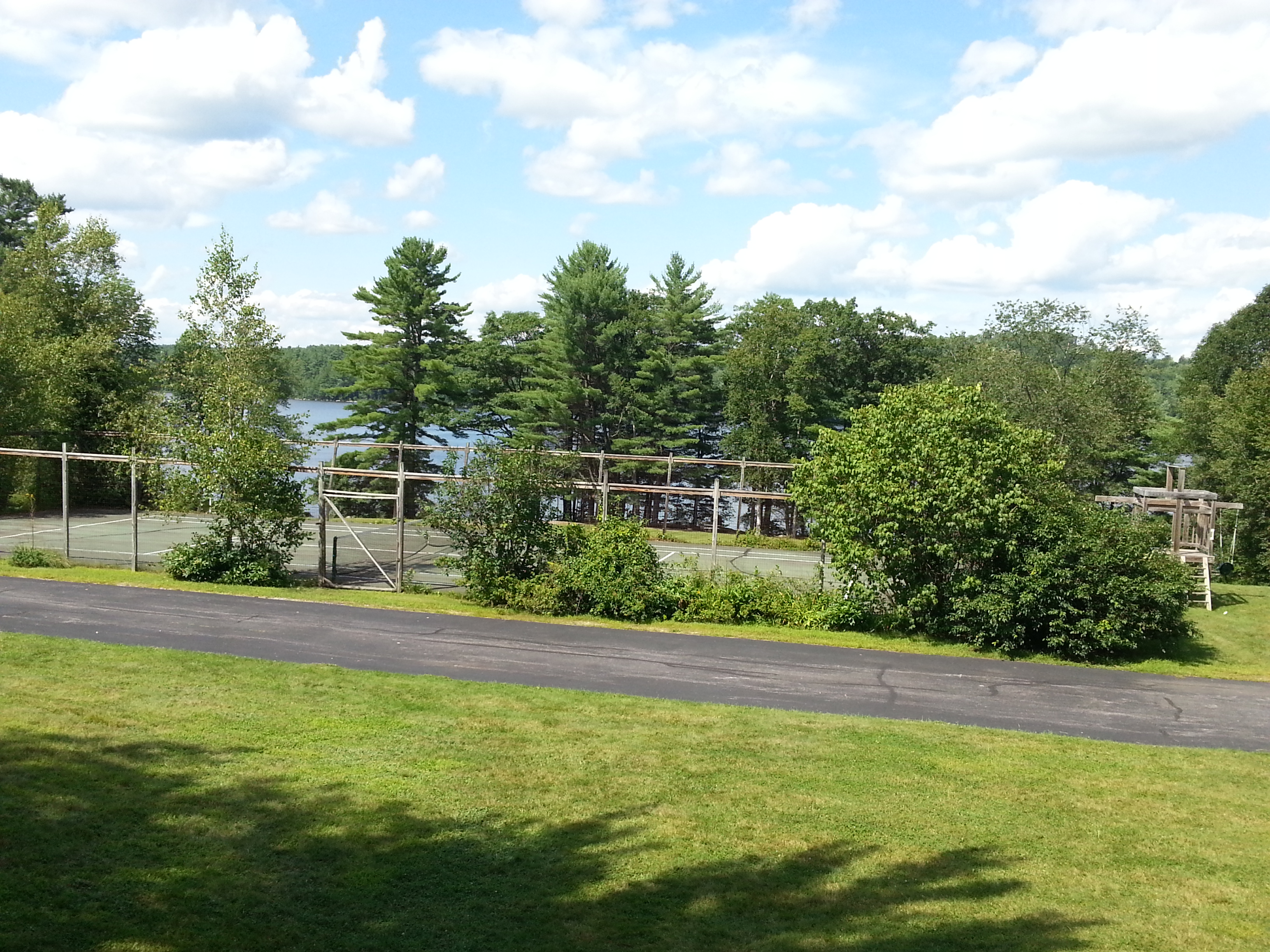
Now all I had was the last fourth of the book to go. And after so many tranquil locations, where did I end up? My cramped kitchen, of course. Not sure why it is, but I seem to write best there. Go figure.
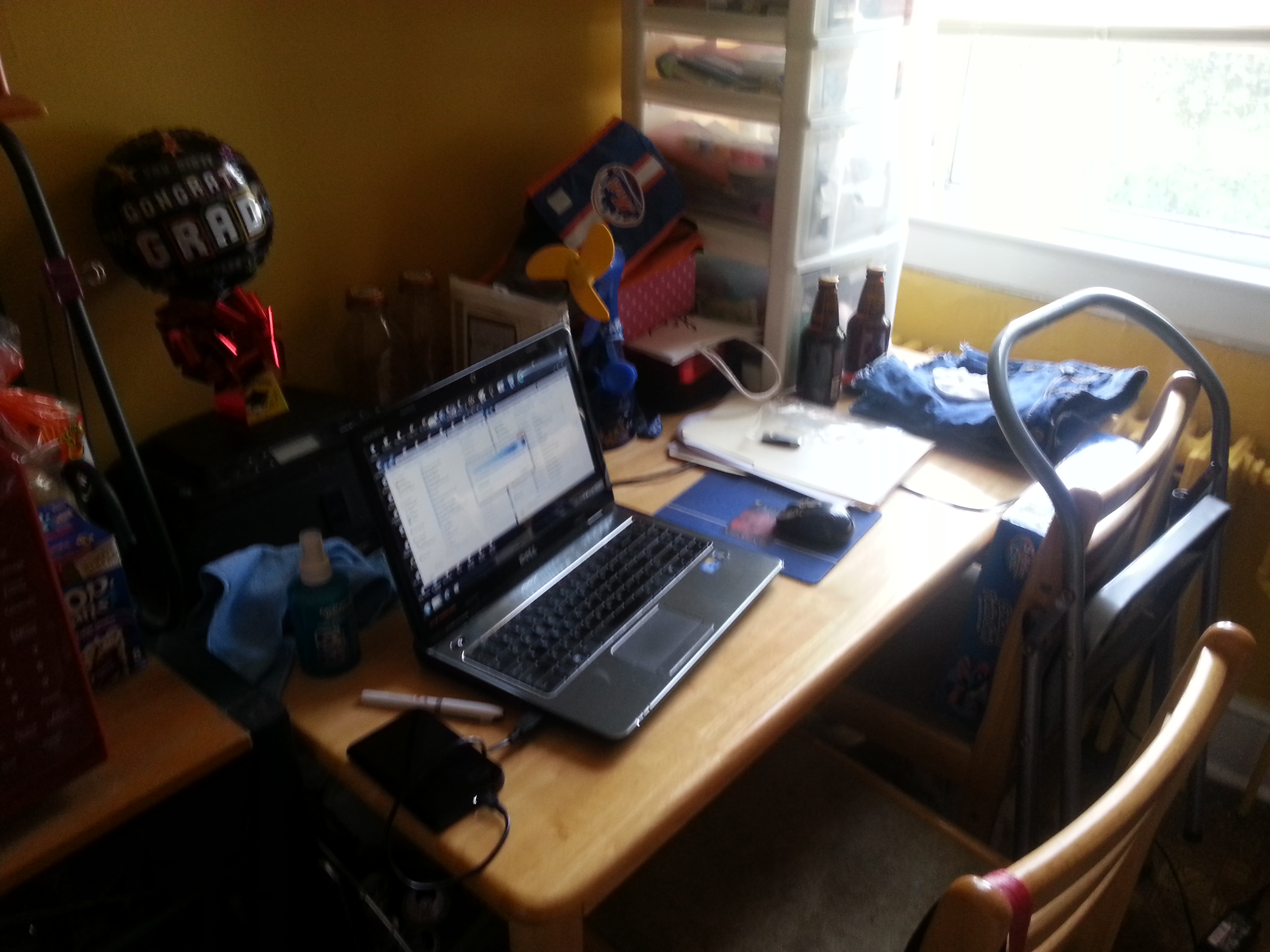
I also did some writing in an airport during a four hour flight delay and made quite a few trips to the library to tap out a few hundred words here and there. The thing is, I wrote wherever I was at the time. I didn’t have time to wait for the perfect moment or place. I simply wrote.
Now go out there and create!
The Joy of Deadlines
Whether you hate them or not, if you’re crazy enough to make it a go of this whole writer thing, deadlines are going to be a part of your life. I’ve heard people say they work better with a deadline – the sound of that little clock ticking lights their creative fire. Others lament that the pressure of a deadline drives them down Writer’s Block Lane, sometimes with a short stop at Xanax Drive.
In my experience, every writer vacillates between embracing and running from deadlines. It depends on your mood, the project (horror writer takes on romance novel for single grannies – wtf???), what’s happening in your life at the moment and – here’s an important one – the money. I’m not saying that money makes it easier. Heck no. Sometimes, the carrot of a big advance can cause temporary paralysis. Other times, you want to put that pool in and that advance will pay for it and the party to christen it, so watch those fingers fly!
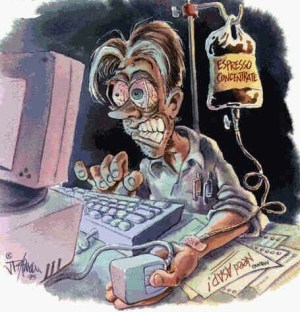 So, what do you do when a deadline looms and you can’t get the words from your brainpan to the keyboard? Unfortunately, there’s no magic pill. I’m sure Pfizer is working on one, but we’re years from it hitting the market place.
All I can offer is my own experience. One thing I’ve done over the past few years is to set a personal deadline for everything I write, whether an editor has a set expectation or not. This way, I’m training myself to write both with a purpose and a plan.
Here’s an example. It’s May 1st and I’m about to start my new novel. Now, my editor has only asked that I send something to him any time in the next year. Well, if I want to build my brand, I can’t rest on my laurels. I have to write a couple of novels and some short stories and maybe even a novella for good measure within that year. Oh, and I have my day job that requires most of my time and my family.
If I didn’t set deadlines for myself, I’d be sunk. So, on May 1st, I estimate that my book will be about 90,000 words. I figure 4 months is a good amount of time to get ‘er done. In my mind, the book has to be complete on September 1st. I want to get that first draft finished by mid July so I have time to show it to my first readers and do several rounds of edits. That means I have about 75 days to write my first draft.

If I do 1,000 words a day on weekdays, and 2,000 on weekends, I’ll cruise on in to my deadline. Then I have to take into account days when life just prevents my ass from sitting down and writing. Well, I’ll make up those words with a week of 1,500 words or maybe cram 5,000 on a Saturday.
The key is that through the entire process, I know exactly where I am, where I need to be, and what needs to be done each day to make it. You have to factor in situations that will throw a monkey wrench in the works. Shit happens. You’ll be fine as long as you’re planning ahead how to get back on track without adding more gray to your scalp.
It’s vital to remember that you’re in control. Writing is more than just something you’ve chosen to do – it’s something you love to do. Always, and I mean always, strive to have fun.
And repeat after me. Deadlines shmeadlines.
What’s been your experience with deadlines? What are some of the tricks you use to get over the hump? Inquiring writers want to know! I’ll give a free e-copy of my book, Sinister Entity, to a random person who comments about their deadline joy.
Writing What You Love & A Case For Keeping Your Day Job
We all want to do what we love for a living, right? I know I do. They say (and we all know who they are) that if you choose a job you love, you’ll never have to work a day in your life. I think I might make a poster of that, complete with a picture of my cat sleeping on the radiator.
Writers are often asked, especially when they are starting out, if they plan to make writing a full time career. You know, quit your stultifying 9 to 5 job and live off the fat of the advance and royalty checks that will shower upon you like rain in Dublin. Naturally, we’d all love to do this. That dream is right up there with winning the lottery. Getting your first book deal feels even harder than hitting Lotto.
The truth is, only a small percentage of authors can rely on what they bring in from their writing as their sole source of income. Next time you go to your bookstore at say, 11am on a Tuesday, pay close attention to all of the names you see on the spines of the books. The vast majority of those folks are slaving away at some office while you’re out browsing.
Where’s the glamour in that? What’s the point of struggling to get published if I still have to clock in every day and stare at my cubicle walls?
I’m here to tell you that there is an upside to this. When we commit to being a writer, we’re basically juggling two full time jobs. The day job pays the bills and hopefully gives you some sense of fulfillment and accomplishment. Writing feeds the soul and puts you in touch with your passion. Keeping up with both jobs also gives you freedom and peace of mind. That’s right, I said you’ll have more freedom, even within your cloth covered cube!
What’s this upside I seem so hellbent to profess?
• Publishers don’t give writers benefit plans or retirement savings. Anyone over 30 with kids will understand the importance of this. In fact, a lot of people consider this more important than salary when considering a job.
• Your day job gives you a steady paycheck. That means you can plan your finances, count on buying groceries every week and paying the rent every month. There are no cash dry spells when you have a day job.
• Because you don’t depend on writing to keep you and your family from living in a cardboard box, you have the FREEDOM to write about the things you love and are passionate about. You take on assignments and book projects that you want to do, not just ones that you need to do in order to survive.
I write horror. Unless your last name is King, Barker, Koontz or a handful of others, you’re confined to being a midlist author, which means the financial payoff will not have you putting a down payment on that pretty Jaguar.
Of the few horror writers I know who make writing their only career, I see their stress and have been told by more than one to treasure my day job. It’s stressful when you have to produce a prodigious output and hope that publishers will accept it and pay something worth the effort. There are no guarantees. Writing in genres they’d never read in becomes a necessity. Did I mention the stress?
Look, we all should dare to dream about landing that game changing book or movie deal that will put our 9 to 5 days behind us. It’s the carrot that keeps us chasing the stick. But don’t fret that you’re on published book #7 and still saying hi to your boss every morning. When you go home at night, you get to dive into the world you love most, and you get recognized and rewarded for it. Not too shabby.
Now, what’s your opinion? Do you think I’m crazy to embrace my day job or spot on? Have you managed to become a full time writer? Share a war story.
 Hunter Shea